
Showing posts with label art. Show all posts
Showing posts with label art. Show all posts
Friday, 19 December 2008

Saturday, 22 November 2008

Monday, 20 October 2008
Ah gua world tour
Who gives a shit about Chris Brown and Rihanna.
Ah gua is the shit. Tickets now available at Ticketek. Ah gua world comeback tour Perth, Brisbane, Sydney and Melbourne.
Sold out shows in New York, Tokyo, Singapore, London and Berlin.
Ah gua show at Rod Laver Arena - Melbourne. Subtitles provided.
Price List: Tranny $5, Pervert $4.50, Chinese $3.00, Indian $3.10, Concession card holders $1.50, Under 18 Free with Adult supervision.
Happy Hour: 6.30pm - 6.45pm.
Drinks and Entertainment provided.
Tickets Selling Fast.
Proudly sponsored by Melbourne Hokkien Association and Melbourne University Karaoke Club.
Sunday, 19 October 2008


Monday, 13 October 2008




Monday, 6 October 2008
Wall-E

4.5/5
I am very absolutely disgusted with animated films trying to cram in as much 21st century pop culture references into a 90 min timeslot (explains why I never watch these things) and I am so relieved this movie is nowhere near that.
I especially like the fact that it has virtually no dialogue for the first half of the movie (a relief from cartoon characters these days that talk way too much - in my opinion it screws up little kids), connecting the audience with the characters and the movie so flawlessly through the visual spectacles and the emotions of a robot purely by his movements, 'beeps' and expressions solely from his eyes (which I think is ingenius). This movie is beautiful visually and also for the raw and genuine emotional quality to it.
The later parts of the movie does not appeal to me that much (I hate sci-fi) but the first half of the movie and the ending makes up for everything.
And I liked the credits part too - which the story and the characters are animated / drawn in such a way that it pays tribute to the evolution of art through time. From the Egyptian wall-paintings, Ancient Greek pottery art to a substantial amount of Van Gogh of the 19th century (I highly suspect the animators are a big fan considering the lack of representation of other notable artists - a little disappointed) , to digital Video-games-like art of the late 20th century. Guess it is a small appreciation and a reminder of these various art forms that has enabled progress in the artistic world that leads up to what we see today on the big screen, and also the recognition of 3D animation (forgive me for my generalisation of this art-form) as a significant to the history of Art.
Aesthetically stunning, creative, beautiful and touching film. Accolades that I have never imagined myself associating with an animated feature.
Thursday, 25 September 2008
Like a virgin, for the very first time (2005)
These are the pictures I took when I just stepped foot into Melbourne. It's interesting to see the things that caught the eye of a 17 year old boy venturing into the outside world all alone for the very first time.
It is very unlikely that I'll take pictures of these sorts ever again. It is so easy to overlook the things around you after experiencing the same thing every other day. Things just didn't look the same anymore and they just became part of a routine.
Sometimes, by clearing your mind from any biases, prejudices or judgments, by forgeting the routine, and take time off to notice the details of the people and places around you, you might just see things in a different light, or experience the same emotions you felt before, or something different altogether - it might just bring a little bit more into your life.


Flinders St Station


Buskers that actually have talent
(the spaceman should die)

Trams

Brothel Advertisements

Buildings that look like clutter of rubbish - Federation square

Elizabeth St

Chinatown

Coles supermarkets

Street Sights


Queen Victoria Market

Annoying rubbish eating birds that shit on your head and steal your food


Splendid Architecture

Saturday, 13 September 2008
Friday, 12 September 2008
Saturday, 6 September 2008


Thursday, 4 September 2008

Sunday, 3 August 2008
Festival Lineup

 3/5
3/5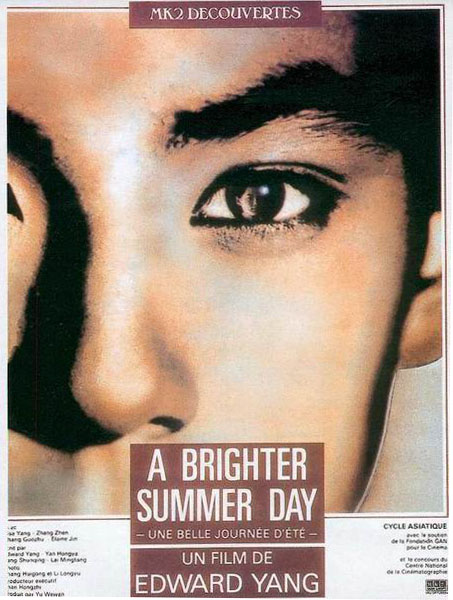

 5/5
5/5On an August morning in 1974, a French street performer named Philippe Petit spent 45 strange and wonderful minutes alone, in the air, at a height of 1,350ft, balancing on a slim steel wire that connected the newly constructed World Trade Centre towers.
Dangerous, reckless and illegal, this now legendary wire walk is the subject of Man on Wire, a superlative documentary from the director James Marsh (The King) that sports the drive of a Hollywood thriller, bears the emotional scars of real life and, like Petit himself, reaches transcendent heights.
The story here is recreated through archive material, dramatic reconstructions and interviews with those involved in the “artistic crime of the century”. It begins in heist-movie style, as 450lb (200kg) of steel cable, plus rigging and personnel are smuggled to the top of the towers under cover of darkness. Soon, however, Marsh cuts into this thrill-ride with the slowly evolving back-stories of Petit and his idealistic young collaborators. We thus get Petit crossing between the towers of Notre Dame in 1971. Then there’s Petit crossing the Sydney Harbour Bridge in 1973. And Petit slowly building his ragtag band of followers.
All along a portrait is emerging of a man alone, a vaguely megalomaniacal creature who is driven to climb by inexplicable internal forces, who is obsessed by the idea of crossing the Trade Centre towers, and who will sacrifice anything, including loved ones, to achieve this. Even in front of Marsh’s camera Petit is twitchy and energetic, jumping in and out of his seat, roaming freely. His friends, including the logistical master-mind Jean-Louis Blondeau, seem much more subdued, as if burdened by their part in Petit’s extraordinary journey (their burden is revealed in the movie’s stinging, and brilliant, coda).
When the walk itself is finally described, the movie shifts gears entirely. The limits of the medium and of language itself are sorely tested as those involved, and Marsh’s movie itself, try to articulate the strange beauty of what Petit did on that August morning. Some of the friends are reduced to tears. Marsh, however, stays in control and, with Michael Nyman’s plaintive strings on the soundtrack, and Petit framed frozen and smiling between the towers in gorgeous monochrome stills, his film becomes an homage to human endeavour and fragility in the face of certain death.
The attacks of 9/11 are never mentioned, and rightly so – this is a film about the life of the towers, not the death. But their inevitable destruction gives the movie a poignant weight, and reminds us of a time when they weren’t morbid geopolitical symbols, but giant footholds for an ambitious Frenchman.
Times Online
'It's quite remarkable that the symbol of capitalism can be transformed into a work of art, or as they cheekily put it, the Artistic Crime of the Century'
Facebook User Review

Saturday, 2 August 2008
Melbourne International Film Festival (1)

The Band's Visit / Bikur Ha-Tizmoret
(English/Arabic/Hebrew)
5/5
In an ocean of predictable movies, "The Band's Visit" is an island of bliss. When you see the advertising about the story of an Egyptian police band getting lost in Israel, you're likely to roll the film instantly in your mind - conflict, hatred, perhaps some awkward humor, and a forced bit or two of vague optimism about the future.(English/Arabic/Hebrew)
5/5
Extract of a user review from IMDB:
Forget all that, it's some other movie. This one is free and clear of anything set, routine, obvious, predictable. "The Band's Visit" is about people - mostly awkward, all real, well- and ill-behaved in turn - and not about agenda, ideology, politics. It's an unsentimental "people movie" (remember when Hollywood used to churn those out?), enormously likable, a treasurehouse of humanism.
"Visit" is also a film you have to work with. It's not dumped on the audience in its fullness by its writer and (first-time) director, Eran Kolirin. Action is slow or nonexistent, dialogue is halting, silences are rampant. And yet it all works so well: even if you have never heard Egyptian music, when the band finally plays (as the end-credits roll), you're guaranteed to groove on it.
Kolirin is a writer and director of great economy. The characters of and relationships between the eight band members - in their powder blue, Sgt. Pepper-wannabe, uniforms are revealed through a word here, an expression there, and pretty soon, you really know them... except that later you realize you didn't.

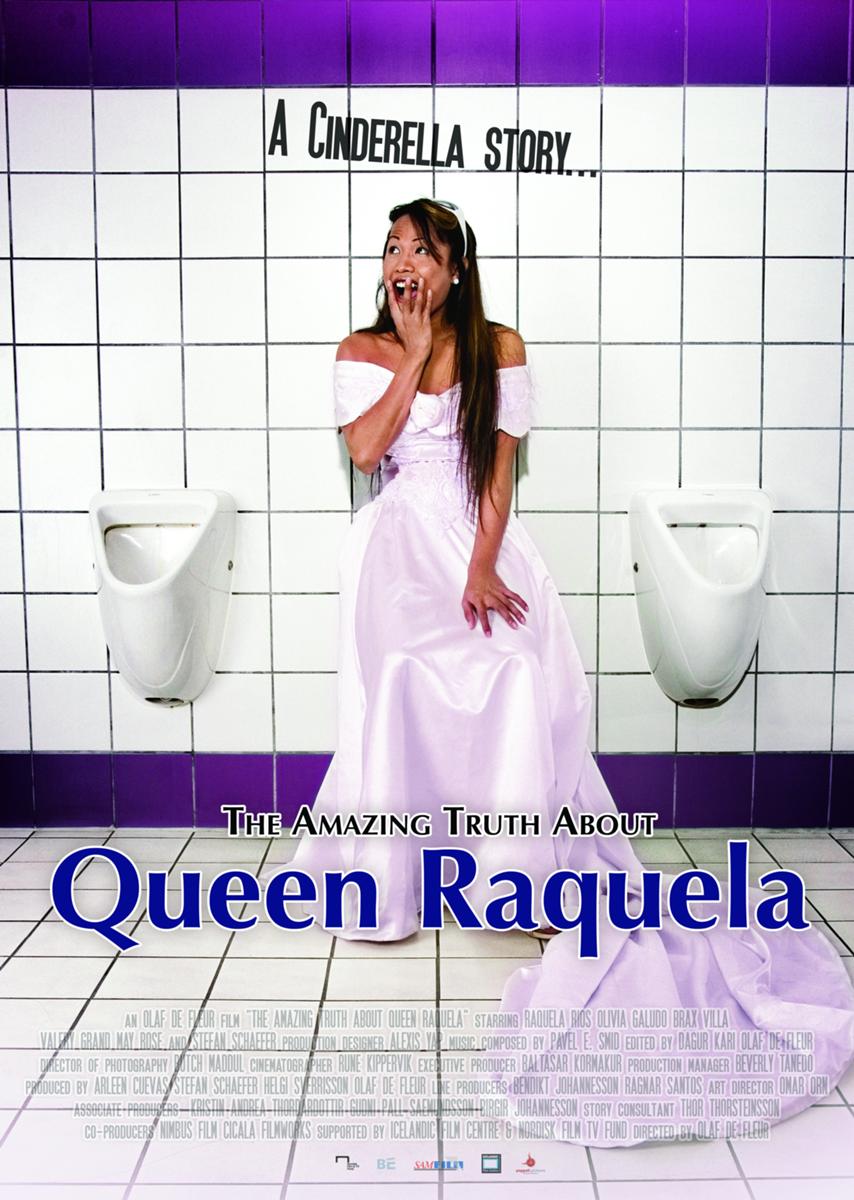
The Amazing Truth about Queen Raquela
3/5
3/5
Thursday, 31 July 2008
I just got the DVD
 5/5
5/5I like this review by Roger Ebert (any attempt by myself to review this movie would not do it any justice):
The movie opens with the flat, confiding voice of Tommy Lee Jones. He describes a teenage killer he once sent to the chair. The boy had killed his 14-year-old girlfriend. The papers described it as a crime of passion, "but he tolt me there weren't nothin' passionate about it. Said he'd been fixin' to kill someone for as long as he could remember. Said if I let him out of there, he'd kill somebody again. Said he was goin' to hell. Reckoned he'd be there in about 15 minutes."
These words sounded verbatim to me from No Country for Old Men, the novel by Cormac McCarthy, but I find they are not quite. And their impact has been improved upon in the delivery. When I get the DVD of this film, I will listen to that stretch of narration several times; Jones delivers it with a vocal precision and contained emotion that is extraordinary, and it sets up the entire film, which regards a completely evil man with wonderment, as if astonished that that such a merciless creature could exist.
The man is named Anton Chigurh. No, I don't know how his last name is pronounced. Like many of the words McCarthy uses, particularly in his masterpiece Suttree, I think it is employed like an architectural detail: The point is not how it sounds or what it means, but the brushstroke it adds to the sentence. Chigurh (Javier Bardem) is a tall, slouching man with lank, black hair and a terrifying smile, who travels through Texas carrying a tank of compressed air and killing people with a cattle stungun. It propels a cylinder into their heads and whips it back again.
Chigurh is one strand in the twisted plot. Ed Tom Bell, the sheriff played by Jones, is another. The third major player is Llewelyn Moss (Josh Brolin), a poor man who lives with his wife in a house trailer, and one day, while hunting, comes across a drug deal gone wrong in the desert. Vehicles range in a circle like an old wagon train. Almost everyone on the scene is dead. They even shot the dog. In the back of one pickup are neatly stacked bags of drugs. Llewelyn realizes one thing is missing: the money. He finds it in a briefcase next to a man who made it as far as a shade tree before dying.
The plot will involve Moss attempting to make this $2 million his own, Chigurh trying to take it away from him and Sheriff Bell trying to interrupt Chigurh's ruthless murder trail. We will also meet Moss' childlike wife, Carla Jean (Kelly Macdonald); a cocky bounty hunter named Carson Wells (Woody Harrelson); the businessman (Stephen Root) who hires Carson to track the money after investing in the drug deal, and a series of hotel and store clerks who are unlucky enough to meet Chigurh.
"No Country for Old Men" is as good a film as the Coen brothers, Joel and Ethan, have ever made, and they made "Fargo." It involves elements of the thriller and the chase but is essentially a character study, an examination of how its people meet and deal with a man so bad, cruel and unfeeling that there is simply no comprehending him. Chigurh is so evil, he is almost funny sometimes. "He has his principles," says the bounty hunter, who has knowledge of him.
Consider another scene in which the dialogue is as good as any you will hear this year. Chigurh enters a rundown gas station in the middle of wilderness and begins to play a word game with the old man (Gene Jones) behind the cash register, who becomes very nervous. It is clear they are talking about whether Chigurh will kill him. Chigurh has by no means made up his mind. Without explaining why, he asks the man to call the flip of a coin. Listen to what they say, how they say it, how they imply the stakes. Listen to their timing. You want to applaud the writing, which comes from the Coen brothers, out of McCarthy.
The $2 million turns out to be easier to obtain than to keep. Moss tries hiding in obscure hotels. Scenes are meticulously constructed in which each man knows the other is nearby. Moss can run but he can't hide. Chigurh always tracks him down. He shadows him like his doom, never hurrying, always moving at the same measured pace, like a pursuer in a nightmare.
This movie is a masterful evocation of time, place, character, moral choices, immoral certainties, human nature and fate. It is also, in the photography by Roger Deakins, the editing by the Coens and the music by Carter Burwell, startlingly beautiful, stark and lonely. As McCarthy does with the Judge, the hairless exterminator in his "Blood Meridian" (Ridley Scott's next film), and as in his "Suttree," especially in the scene where the riverbank caves in, the movie demonstrates how pitiful ordinary human feelings are in the face of implacable injustice. The movie also loves some of its characters, and pities them, and has an ear for dialog not as it is spoken but as it is dreamed.
Many of the scenes in "No Country for Old Men" are so flawlessly constructed that you want them to simply continue, and yet they create an emotional suction drawing you to the next scene. Another movie that made me feel that way was "Fargo." To make one such film is a miracle. Here is another.
Tuesday, 29 July 2008

Saturday, 26 July 2008
The Dark Knight
 The Dark Knight - 3.5 or 3.75 /5
Greatest movie ever? You gotta be kidding me.
Can IMDB please review their voting system?
It was good, great perhaps (for a superhero movie) but not anywhere near the greatest movie of all time.
Thank God for minimal CGI.
Would only rate it a 3 or a generous 3.5/ 5 were it not for Heath Ledger.
My very biased opinion is that the Joker didn't have enough screen time.

This man - 4.5 or 4.75/ 5
But still, do not say this is the best ever on-screen performance by an actor.
There are many performances that are on par with Ledger's work in this film, and few that are likely to be even greater.
Worthy of an Oscar nomination? Yes.
Worthy of an Oscar win? Too early to tell, there are some actors capable of producing work that equals what we have seen here or perhaps even surpass it. And Films with Oscar-worthy performances are generally only available from October onwards.
 And I suggest this to Batman
Subscribe to:
Posts (Atom)




 Posts
Posts


